

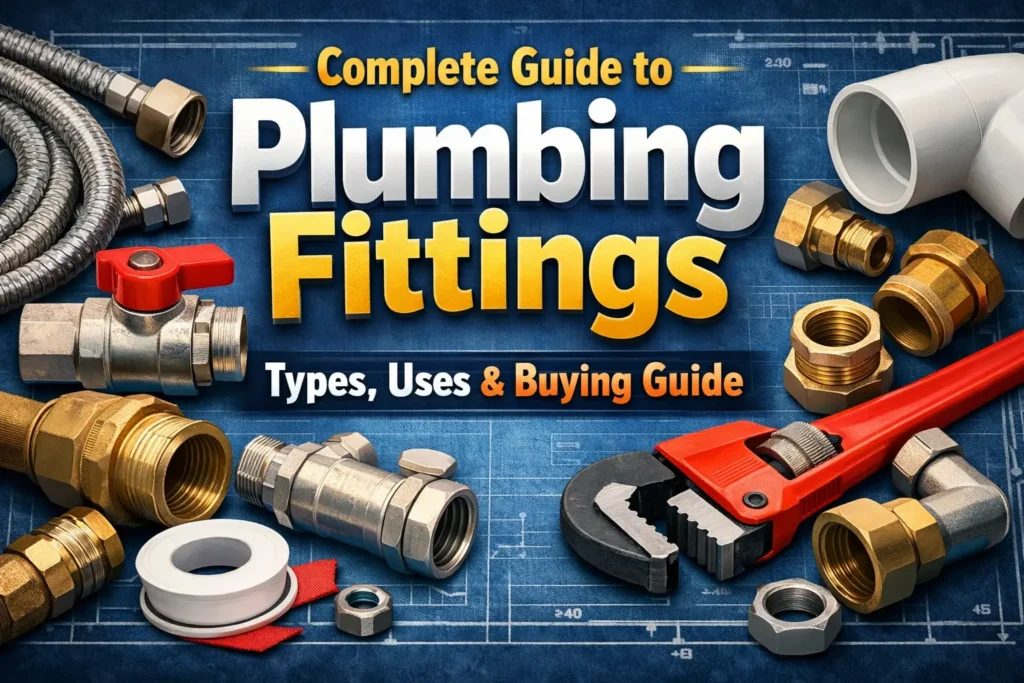
Plumbing is an important part of every building, whether it’s a home, an office, or a factory. Plumbing fittings are what make a plumbing system work well. These small but important parts connect pipes, control the flow of water, and make sure your system works well. Whether you’re a homeowner, contractor, or DIY enthusiast, understanding plumbing fittings can save you time, money, and headaches.
In this guide, we’ll cover everything about plumbing fittings—from what they are, to their types, materials, and how to choose the right ones for your needs.
What Are Plumbing Fittings?
Plumbing fittings are components used to connect, terminate, control, or change the direction of pipes in a plumbing system. They are designed to create a leak-free connection between pipes of different sizes or materials. Without fittings, it would be impossible to create a complete plumbing network.
Key Functions of Plumbing Fittings:
-
Connecting two or more pipes
-
Changing the direction of water flow
-
Controlling water flow through valves
-
Adapting pipes of different diameters
Fittings are used in both residential and commercial plumbing systems and come in various shapes, sizes, and materials to suit different applications.
The Significance of Plumbing Fittings
It is impossible to exaggerate the significance of plumbing fixtures. This is the reason:
-
Leak Prevention: Your plumbing system won’t leak if the fittings are installed correctly.
-
Flow Control: You can effectively regulate the flow of water by using certain fittings, such as valves.
-
Durability: Your plumbing system will last longer if you use the proper fittings.
-
Flexibility: Without sacrificing functionality, fittings enable intricate piping configurations.
-
Safety: High-quality fittings lower the possibility of contamination, water damage, and burst pipes.
To put it briefly, a dependable plumbing system is built on top of high-quality fittings.
Plumbing Fitting Types
Plumbing fixtures are divided into groups according to their purpose. The most prevalent kinds are as follows:
1. Elbow Fittings
Elbows are used to change the direction of a pipe, typically at 90° or 45° angles. They are essential in navigating corners and turns in plumbing layouts.
2. Tee Fittings
Tee fittings are T-shaped connectors used to split or combine flow in plumbing systems. They are ideal for branching pipes in multiple directions.
3. Coupling Fittings
Couplings are straight connectors used to join two pipes of the same diameter. They are simple yet vital for extending piping runs.
4. Union Fittings
Unions allow pipes to be connected and disconnected easily. They are perfect for sections that may require future maintenance.
5. Reducer Fittings
Reducers are used to connect pipes of different diameters, ensuring smooth flow and pressure management.
6. Nipple Fittings
Nipples are small sections of pipe threaded on both ends, used to connect two fittings or pipes.
7. Cap & Plug Fittings
-
Caps are used to close the end of a pipe externally.
-
Plugs close the end internally.
Both are useful in temporarily or permanently sealing off pipes.
8. Valve Fittings
Valves control water flow. Common types include:
-
Ball valves – provide on/off control.
-
Gate valves – regulate flow gradually.
-
Check valves – prevent backflow
Materials of Plumbing Fittings
Plumbing fittings come in a variety of materials, each suited for specific applications:
1. PVC (Polyvinyl Chloride)
-
Lightweight and affordable
-
Used for cold water supply and drainage
-
Corrosion-resistant but not suitable for hot water
2. CPVC (Chlorinated Polyvinyl Chloride)
-
Can handle hot water
-
Durable and chemical-resistant
-
Ideal for residential plumbing
3. Brass
-
Highly durable and corrosion-resistant
-
Suitable for hot and cold water systems
-
Slightly expensive but long-lasting
4. GI (Galvanized Iron)
-
Strong and sturdy
-
Resistant to mechanical damage
-
Susceptible to corrosion over time
5. PPR (Polypropylene Random Copolymer)
-
Modern material, lightweight and long-lasting
-
Resistant to heat and chemicals
-
Suitable for both residential and commercial systems
Residential vs Commercial Fittings
The choice of fittings depends on the type of plumbing system:
-
Residential Plumbing Fittings: Focus on water supply and drainage for homes. Usually smaller in size and designed for moderate water pressure.
-
Commercial Plumbing Fittings: Designed for high-pressure systems, heavy usage, and durability. Often larger and made from materials like brass, stainless steel, or PPR.
Understanding the difference ensures the right fittings are used, preventing premature wear or leaks.
Common Mistakes When Buying Fittings
Even experienced plumbers can make mistakes when buying fittings. Avoid these pitfalls:
-
Buying the wrong size or diameter of fittings
-
Ignoring material compatibility with pipes
-
Choosing cheap fittings that may leak or corrode
-
Not planning for future maintenance.
-
Mixing different materials without adapters
By paying attention to these details, you can ensure a long-lasting plumbing system.
Buyer’s Guide: How to Choose the Right Plumbing Fittings
Choosing the right fittings is easier if you follow these steps:
-
Identify your piping material (PVC, CPVC, Brass, GI, PPR)
-
Determine pipe diameter to match fittings.
-
Consider the application: hot water, cold water, drainage.
-
Check the quality and standards: look for certified brands.
-
Decide between residential or commercial grade.
-
Plan for maintenance: choose unions or removable fittings if needed
Top Plumbing Fittings Brands
Some brands are known for high-quality fittings:
-
V-Guard (PVC & CPVC)
-
Georg Fischer (PPR & Brass)
-
Aqua (Valves & Brass fittings)
-
Zoloto (Commercial fittings)
Choosing reliable brands reduces the risk of leaks, corrosion, and plumbing failures.
Plumbing Fittings Chart & Visual Guide
Creating a visual reference is very helpful for buyers:
-
Include names of fittings with pictures.
-
Provide a size guide for easy selection.
-
Optional: PDF download for installers and DIY enthusiasts
This type of content is highly shareable and great for SEO.
Local SEO & Product Page Ideas
If you sell plumbing fittings, it’s essential to have optimized local pages:
Example Titles:
-
Plumbing Fittings Supplier in Abu Dhabi.
-
Plumbing Fittings Shop Near Me
Content Tips:
-
Include the city and area name.
-
Mention same-day delivery or installation.
-
Embed Google Maps for directions.
-
Include a clear call-to-action: “Get a Quote” or “Call Now.”
FAQ: Plumbing Fittings
Q: What are plumbing fittings used for?
A: They connect, terminate, or control pipes to ensure smooth water flow.
Q: Which plumbing fittings are best for hot water?
A: CPVC, Brass, and PPR fittings are ideal for hot water systems.
Q: How long do plumbing fittings last?
A: It depends on the material—PVC: 25+ years, Brass: 50+ years, GI: 20–30 years, PPR: 50 years.
Q: Can I mix different types of fittings?
A: Yes, but use proper adapters to prevent leaks and ensure compatibility.
Final Thoughts
Plumbing fittings might seem small, but they are critical to the efficiency, safety, and longevity of your plumbing system. From elbows to valves, from PVC to brass, choosing the right fitting ensures smooth operation and reduces future repair costs. Whether you are a homeowner planning a renovation or a business installing new plumbing, understanding fittings is essential.
For those looking to buy high-quality plumbing fittings, make sure to choose a reliable supplier, check the materials, and consider installation services if needed. With the right fittings, your plumbing system can perform flawlessly for decades.
https://shorturl.fm/ZuPmp