

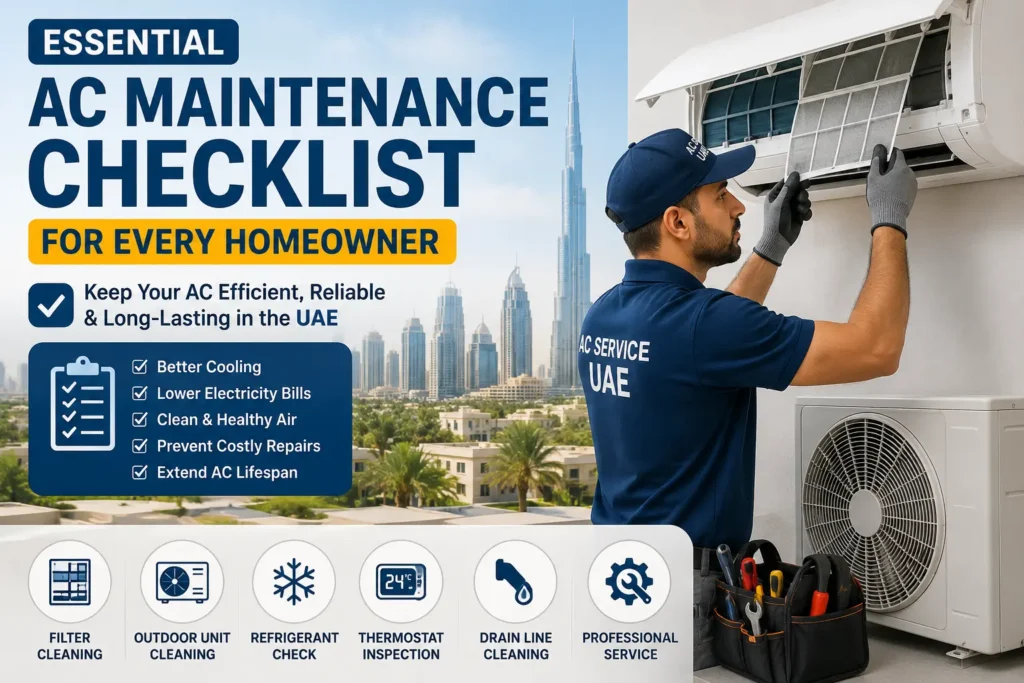
In the UAE, an air conditioner isn’t a luxury—it’s an essential part of everyday life. With temperatures often exceeding 45°C during the summer, your AC system works much harder than it would in many other countries. Without regular maintenance, your unit can lose efficiency, consume more electricity, produce poor airflow, and eventually fail when you need it most.
Following a proper AC maintenance checklist helps extend the lifespan of your system, improve indoor air quality, reduce electricity bills, and prevent costly emergency repairs.
Whether you own a villa, apartment, office, or commercial property in Dubai, Abu Dhabi, Sharjah, Ajman, or anywhere else in the UAE, this comprehensive guide covers everything you need to know about air conditioner maintenance.
Why AC Maintenance Is Important in the UAE
The UAE’s climate creates unique challenges for air conditioning systems.
Several factors increase wear and tear:
- Constant year-round operation
- Fine desert dust and sand
- High outdoor temperatures
- Humidity in coastal cities
- Heavy compressor workload
Without regular AC service, you may experience:
- Weak cooling
- Higher DEWA or ADDC electricity bills
- Bad odors
- Water leakage
- Frozen evaporator coils
- Compressor failure
- Poor indoor air quality
Routine maintenance can improve cooling efficiency by up to 15–20%, reduce breakdowns, and significantly increase the lifespan of your HVAC system.
Complete AC Maintenance Checklist
Below is the essential checklist every UAE homeowner should follow.
1. Clean or Replace the Air Filter
The air filter is one of the most important parts of your AC system.
Because of the UAE’s hot, dusty climate and frequent exposure to sand, air conditioner filters accumulate dirt and debris much more quickly than they do in many other parts of the world.
A dirty filter restricts airflow, forcing the system to work harder.
Signs the Filter Needs Cleaning
- Weak airflow
- More dust indoors
- AC runs longer
- Higher electricity bills
- Poor cooling
How Often?
In the UAE:
- Every 2–4 weeks during summer
- Every 1–2 months during winter
DIY Steps
- Turn off the AC.
- Open the indoor unit.
- Remove the filter.
- Vacuum loose dust.
- Wash with mild soap and water.
- Allow it to dry completely.
- Reinstall.
Replace damaged filters immediately.
2. Clean the Outdoor Condenser Unit
The outdoor condenser unit releases the heat from your home.
Dust, sand, leaves, and debris block airflow around the unit.
This forces the compressor to consume more electricity.
What to Check
- Dust buildup
- Sand accumulation
- Plastic bags
- Plant growth
- Blocked vents
Cleaning Tips
- Turn off power.
- Remove visible debris.
- Gently wash fins with water.
- Avoid high-pressure washing.
- Keep at least 60 cm clearance around the unit.
Professional cleaning is recommended every six months.
3. Inspect Refrigerant Levels
Refrigerant is responsible for absorbing and transferring heat.
Low refrigerant levels cause:
- Warm air
- Longer cooling cycles
- Frozen evaporator coils
- Compressor damage
Signs of Low Refrigerant
- AC blowing warm air
- Ice on indoor pipes
- Hissing sounds
- High energy bills
- Reduced cooling performance
Only licensed HVAC technicians should inspect or refill refrigerant.
Never attempt DIY refrigerant charging.
4. Check the Thermostat
Your thermostat regulates when your air conditioner turns on and off.
Incorrect thermostat settings waste electricity and reduce comfort.
Inspection Checklist
- Correct room temperature?
- Responsive controls?
- Proper scheduling?
- Battery condition (if applicable)
- Sensor calibration
Recommended Temperature in the UAE
Energy experts recommend:
24–25°C
Every degree below this increases electricity consumption.
Smart thermostats can further reduce energy costs.
5. Clean the Drain Line
As your AC removes humidity, condensation flows through the drain line.
Dust, algae, and mold can block the drain.
Blocked drain lines often cause:
- Water leakage
- Ceiling damage
- Mold growth
- Musty smells
Maintenance Tips
- Inspect monthly
- Flush with clean water
- Use approved cleaning solution
- Check drain pan
Professional drain flushing is recommended annually.
6. Inspect Evaporator Coils
Dirty evaporator coils reduce heat absorption.
This causes:
- Poor cooling
- Ice formation
- Increased electricity use
- Compressor strain
Professional coil cleaning should be completed every year.
7. Inspect Condenser Coils
Outdoor condenser coils collect dust quickly in the UAE.
Dirty coils reduce heat transfer.
Symptoms include:
- High electricity bills
- Reduced cooling
- Compressor overheating
Annual deep cleaning keeps the unit operating efficiently.
8. Check Electrical Connections
Loose electrical connections can become dangerous.
Technicians should inspect:
- Wiring
- Capacitors
- Contactors
- Circuit boards
- Voltage
- Current draw
Electrical inspections improve both safety and reliability.
9. Inspect Air Ducts
If your home has central air conditioning, ductwork should also be inspected.
Dirty ducts reduce airflow and spread dust throughout your home.
Common problems include:
- Dust buildup
- Mold
- Air leaks
- Poor insulation
Professional duct cleaning every 2–3 years is recommended.
10. Lubricate Moving Parts
Some older AC systems contain motors requiring lubrication.
Without lubrication:
- Friction increases
- Components wear faster
- Energy consumption rises
Modern systems generally require little lubrication but should still be inspected.
11. Check Insulation
Damaged insulation around refrigerant lines reduces efficiency.
Replace cracked or deteriorated insulation to improve cooling performance.
12. Listen for Unusual Noises
Strange sounds often indicate developing problems.
Common sounds include:
Buzzing
Electrical issue
Clicking
Faulty relay
Grinding
Motor bearings
Rattling
Loose components
Hissing
Possible refrigerant leak
Address unusual noises immediately before they become expensive repairs.
13. Check Airflow
Walk around your home and inspect every air vent.
Look for:
- Weak airflow
- Closed vents
- Uneven temperatures
- Dust buildup
Blocked vents reduce system efficiency.
14. Inspect for Water Leaks
Water around the indoor unit usually indicates:
- Blocked drain
- Frozen coil
- Drain pan damage
- Condensation issues
Ignoring leaks may cause mold and structural damage.
15. Test Overall Cooling Performance
After completing maintenance:
- Measure room temperature.
- Check cooling speed.
- Verify thermostat accuracy.
- Listen for unusual sounds.
- Ensure consistent airflow.
Everything should operate smoothly.
How Frequently Should You Service Your AC in the UAE?
The UAE climate requires more frequent servicing than many countries.
Monthly
- Clean filters
- Check airflow
- Inspect thermostat
Every 3–6 Months
- Outdoor cleaning
- Drain inspection
- Performance check
Every 6 Months
- Professional AC service
- Refrigerant inspection
- Electrical inspection
Once Per Year
- Deep coil cleaning
- Complete HVAC inspection
- Duct inspection
- System optimization
For homes where the AC runs almost continuously, two professional services per year are highly recommended.
Professional AC Service vs DIY Maintenance
Many maintenance tasks can be handled by homeowners, while others require trained HVAC professionals.
| DIY Maintenance | Professional AC Service |
|---|---|
| Filter cleaning | Refrigerant inspection |
| Outdoor debris removal | Coil cleaning |
| Thermostat adjustment | Electrical testing |
| Vent cleaning | Compressor inspection |
| Visual leak inspection | Motor servicing |
| Basic cleaning | Duct inspection |
| Airflow check | System diagnostics |
Attempting advanced repairs without proper tools may damage the system and void the manufacturer’s warranty.
Common Signs Your AC Needs Immediate Service
Don’t wait for complete system failure.
Call an AC technician if you notice:
- Warm air from vents
- Weak airflow
- Bad smells
- Water leakage
- Ice buildup
- High electricity bills
- Loud noises
- Frequent cycling
- Thermostat not responding
- Uneven cooling
Early repairs are almost always less expensive than emergency replacements.
Tips to Improve AC Efficiency in UAE Homes
In addition to following this AC maintenance checklist, homeowners can improve performance by:
- Keeping doors and windows closed while the AC is running.
- Using blackout curtains to reduce heat gain.
- Setting the thermostat between 24–25°C.
- Avoiding blocked air vents.
- Running ceiling fans to circulate cool air.
- Scheduling professional maintenance before the summer season.
- Replacing aging units with energy-efficient inverter models when necessary.
These simple habits can noticeably reduce electricity consumption while keeping your home comfortable.
Final Thoughts
Living in the UAE means relying on your air conditioner for much of the year. A well-maintained AC system not only provides reliable cooling but also lowers energy bills, improves indoor air quality, and helps avoid unexpected breakdowns during the hottest months.
By following this AC maintenance checklist, performing simple DIY tasks like filter cleaning, and scheduling professional AC service at least twice a year, you can keep your air conditioner running efficiently for years to come. Whether you live in Dubai, Abu Dhabi, Sharjah, or any other emirate, consistent air conditioner maintenance is one of the smartest investments you can make in your home’s comfort and your system’s longevity.
Leave a Reply